California median pay
$76,370 a year
National median
$62,780
Ironworkers in California
About 7,300
Apprenticeship
4 years minimum
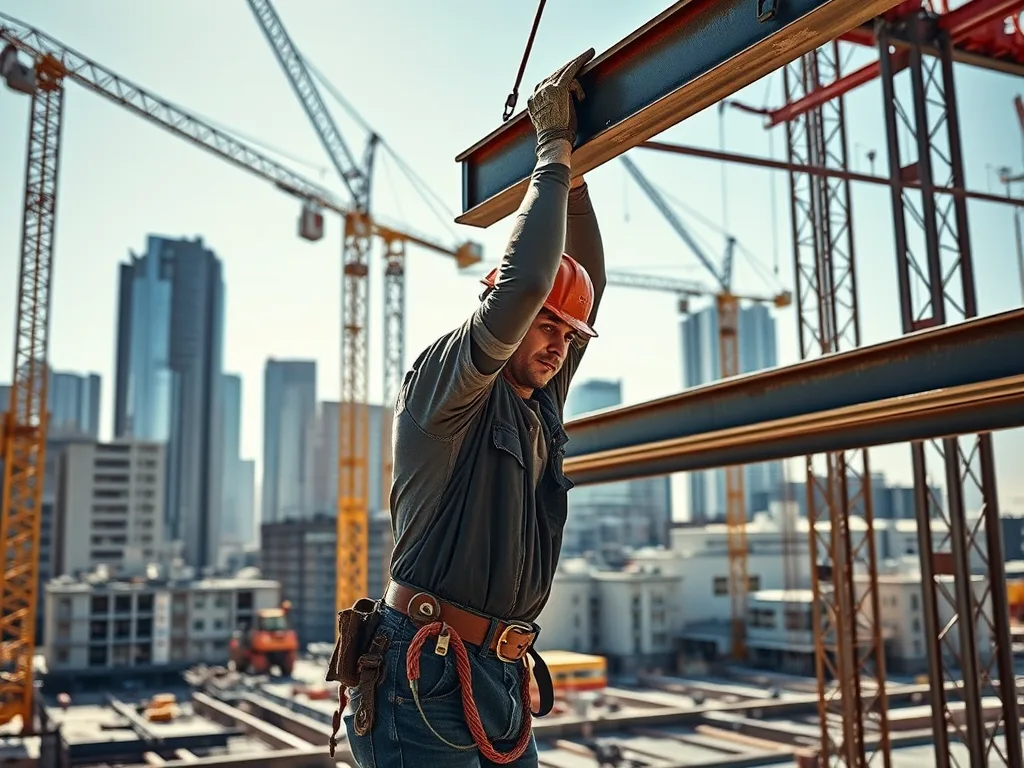
Ironworkers raise the steel frames of buildings and bridges, place the rebar that reinforces concrete, and install metal stairs, railings and decking. California pays them about $13,600 above the national median, and in San Jose the median tops $109,000. Most California ironworkers come up through a union apprenticeship.
What makes a good ironworker apprentice
From the dean’s desk
Being a good welder, showing up on time, and not being afraid of heights.
— Lester Burkes, Dean of Trades, Transportation & Apprenticeship
- Welding: ironworkers weld and cut steel on the job, so strong welding skills make you more useful from day one. A welding class or certification before you apply helps.
- Reliability: crews depend on every member being there on time. Being dependable is how apprentices keep getting dispatched.
- Comfort at heights: structural ironworkers walk beams and work on open steel high above the ground, tied off with fall protection.
How the apprenticeship works
California’s field ironworker apprenticeship standards call for at least four years and 5,600 hours of on-the-job training, plus at least 160 hours of classes a year. Training covers fabrication (layout, welding, burning, bolting), installation of structural and reinforcing steel and decking, and rigging and safety.
Apprenticeships are run with ironworker union locals around the state. In Southern California, for example, Cerritos College partners with Local 433 (structural) and Local 416 (reinforcing) so apprentices can earn college credit and even an associate degree while they train. Basic requirements usually include being 18, a high school diploma or GED, and the physical ability to do the work.
What ironworkers earn in California
California ironworkers earned a median of $76,370 in May 2025, compared with $62,780 nationally.
| Area | Median pay (May 2025) | Hourly |
|---|---|---|
| San Jose–Sunnyvale–Santa Clara | $109,440 | $52.62 |
| Vallejo | $106,900 | $51.40 |
| San Francisco–Oakland–Fremont | $87,340 | $41.99 |
| Fresno | $80,110 | $38.51 |
| Los Angeles–Long Beach–Anaheim | $78,040 | $37.52 |
| Sacramento–Roseville–Folsom | $77,760 | $37.39 |
| San Diego–Chula Vista–Carlsbad | $76,400 | $36.73 |
| Riverside–San Bernardino–Ontario | $72,790 | $34.99 |
| California overall | $76,370 | $36.72 |
| United States | $62,780 | $30.18 |
California projects about 6% growth in ironworker jobs from 2024 to 2034, with about 620 openings a year.
Steps to become an ironworker in California
1
Finish high school or a GED
Math and shop classes help.
2
Learn to weld
A welding class or certification makes you a stronger applicant.
3
Apply to an ironworker apprenticeship
Contact the union local or apprenticeship program in your area.
4
Complete at least 5,600 hours of training
Work on real job sites and attend classes each year.
5
Reach journey-level status
Keep adding skills like rigging and certified welding.
Frequently asked questions
What makes a good ironworker apprentice?
Strong welding skills, showing up on time every day, and being comfortable working at heights.
How long is an ironworker apprenticeship in California?
At least four years, with a minimum of 5,600 hours of on-the-job training.
How much do ironworkers make in California?
The median was $76,370 a year in May 2025, and over $109,000 in the San Jose area.
Sources
- California DAS: Field Ironworker apprenticeship standards
- Cerritos College: Field Ironwork apprenticeship
- BLS Occupational Outlook Handbook: Ironworkers
- O*NET OnLine: Ironworker wages and outlook in California (BLS OEWS May 2025)
Related: Ironworker in Washington · Welder in California · All California guides

Leave a Reply