WA median pay
$81,700 a year
Seattle-area median
$95,750
Operators in WA
About 10,290
Dean’s top trait
Reliability
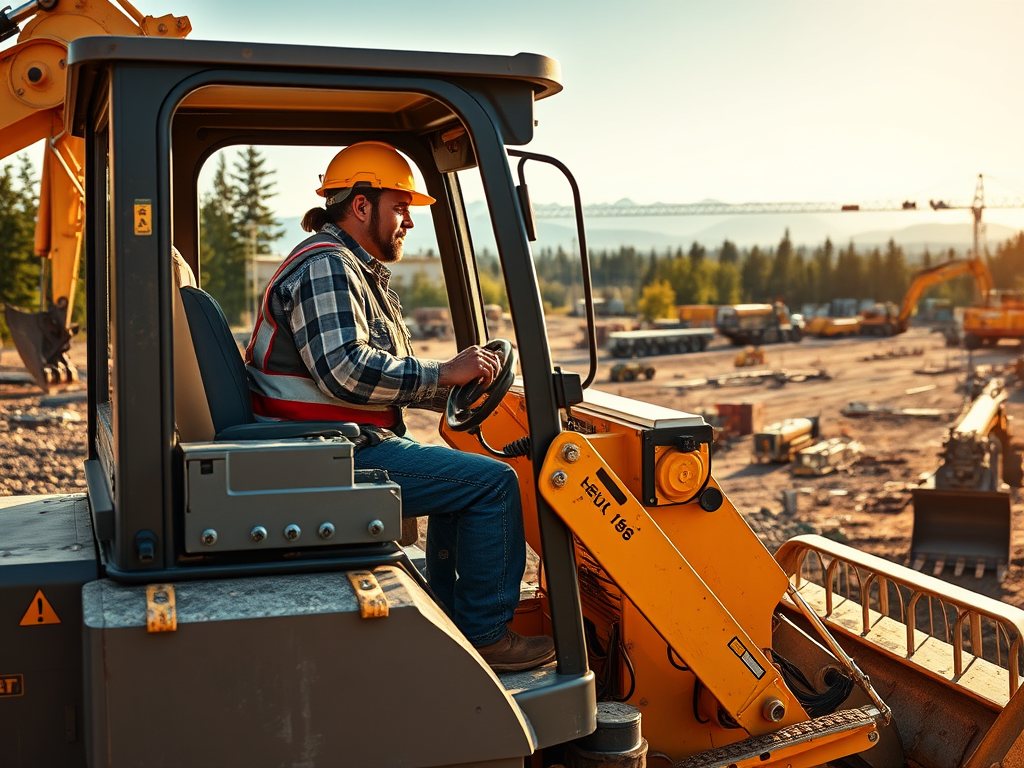
Heavy equipment operators run the excavators, dozers, loaders, graders and cranes that build Washington’s roads, ports, housing and utilities. It’s one of the better-paying construction trades in the state, and employers hang on to the good ones.
Looking for an apprenticeship? Search every registered apprenticeship program in Washington by trade, region and union or non-union, with starting and journey-level pay, in our free Washington Apprenticeship Finder.
What makes an operator employers want to keep
From the dean’s desk
Reliability. You have to understand they need you at the site, and you are not easily replaceable. Your dependability and your ability to communicate are your strongest assets.
— Lester Burkes, Dean of Trades, Transportation & Apprenticeship
When an operator doesn’t show, the crew waiting on that machine can’t work either. Showing up on time, every day, and communicating clearly with the crew and the foreman matter as much as seat time.
What operators earn in Washington
| Area | Median pay (May 2025) | Jobs |
|---|---|---|
| Olympia–Lacey–Tumwater | $103,060 | 260 |
| Seattle–Tacoma–Bellevue | $95,750 | 4,860 |
| Kennewick–Richland | $79,850 | 460 |
| Spokane–Spokane Valley | $74,360 | 700 |
| Washington overall | $81,700 | 10,290 |
These figures are for operating engineers and other construction equipment operators. The national median for the occupation was $59,850, so Washington pays well above average.
Ways to get trained in Washington
- Union apprenticeship: the International Union of Operating Engineers runs apprenticeships through Local 612 and Local 302, with paid training, benefits and job placement.
- Open-shop apprenticeship: CITC of Washington offers a heavy equipment operator program.
- Short-term schools: private training schools offer programs of a few weeks. Compare costs and placement results carefully.
Steps to become an operator
1
Get your basics in place
A high school diploma or GED and a valid driver’s license. A CDL helps if you’ll haul equipment.
2
Choose your training route
Apprenticeships take longer but pay you while you learn and usually lead straight to work.
3
Learn safety and site communication
Hand signals, site radios and safety rules are part of the job from day one.
4
Build seat time
Most operators start on smaller equipment and move up to larger machines.
5
Add certifications
Crane work in Washington requires state crane operator certification through L&I.
Frequently asked questions
How much do heavy equipment operators make in Washington?
The state median was $81,700 in May 2025, and $95,750 in the Seattle–Tacoma–Bellevue area.
Do I need a license to run heavy equipment in Washington?
There’s no general operator license, but crane operators need Washington crane certification, and a CDL is often required to haul equipment.
What do employers look for in an operator?
Reliability and communication. Operators are hard to replace on a job site, so dependability matters as much as skill.
Sources
Related: How to Get Your CDL in Washington · Diesel Mechanic in Washington · All Washington guides


Leave a Reply