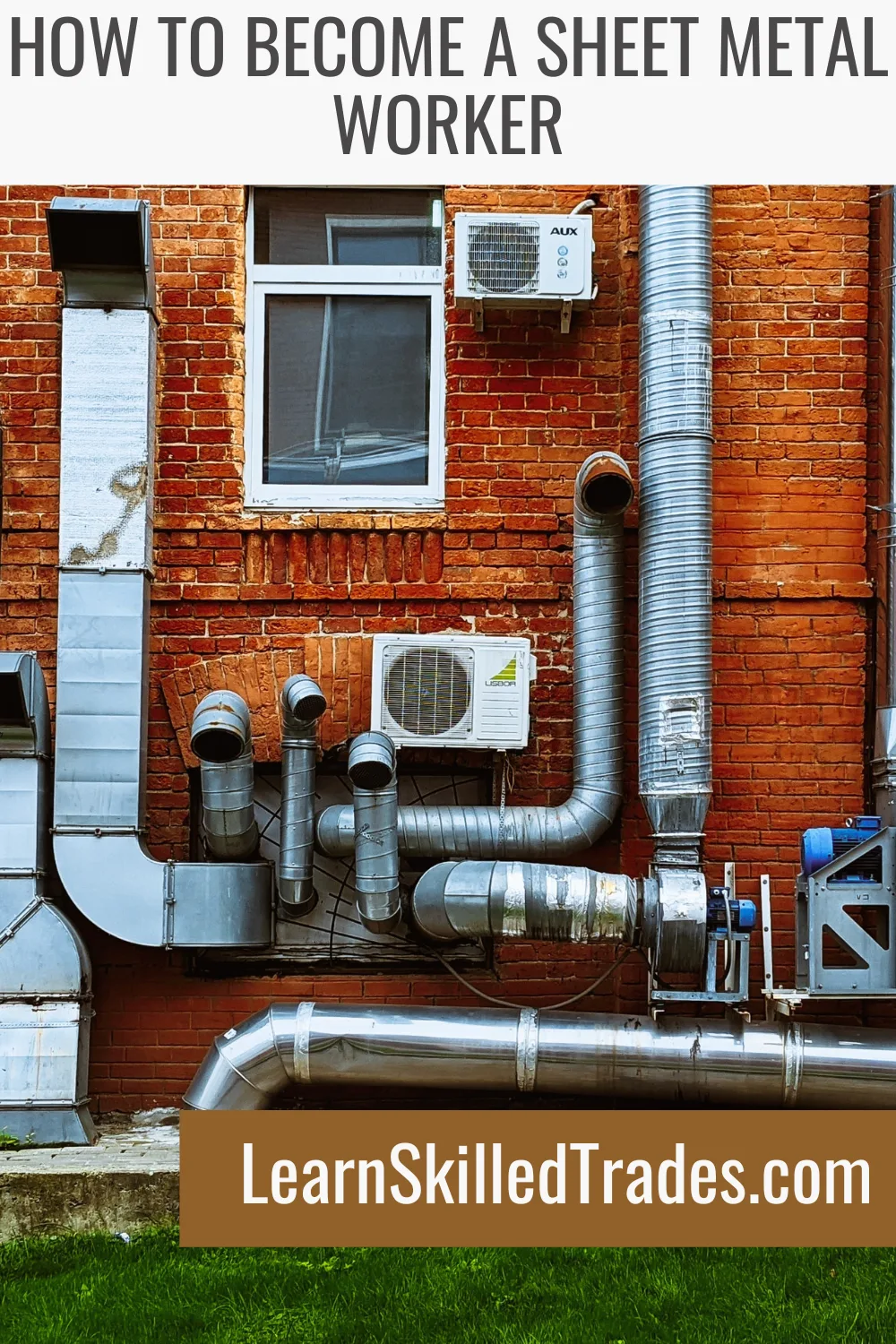
Sheet metal workers make and install products from thin metal sheets: heating and air conditioning ductwork, roofing and flashing, gutters, kitchen hoods, architectural metal and custom parts. Some spend most of their time in a fabrication shop running cutting machines, brakes and plasma tables; others install duct and metal on job sites; others service and balance HVAC systems in finished buildings.
Employers use titles such as HVAC sheet metal installer, field installer, commercial sheet metal service installer, sheet metal mechanic and fabricator. This guide covers the steps, the sheet metal apprenticeship and other training, how long it takes, sheet metal worker salary, and apprenticeships and jobs open right now.
How to become a sheet metal worker, step by step
- Finish high school or get your GED. Take algebra and geometry if you can; the Bureau of Labor Statistics says blueprint reading, mechanical drawing and welding classes help too.
- Be at least 18. That is the usual minimum age for a construction apprenticeship.
- Apply to a sheet metal apprenticeship. Union joint apprenticeship training committees (JATCs) and non-union contractor programs both take applications, often once or twice a year.
- Or start in a shop. Fabrication shops and manufacturers hire helpers and train them, and some technical colleges teach welding and sheet metal fabrication.
- Learn layout, fabrication and installation. Apprentices learn to read drawings, lay out patterns, cut and form metal, weld and install systems safely.
- Become a journey-level sheet metal worker. After finishing, you can specialize in fabrication, installation, service, testing and balancing, or architectural work, and later move into foreman or estimating roles.
Sheet metal apprenticeship and other training paths
- Union sheet metal apprenticeship (JATC). Union sheet metal workers belong to SMART (the International Association of Sheet Metal, Air, Rail and Transportation Workers). Local JATCs run the apprenticeship with a national curriculum from the International Training Institute. You work for union contractors, go to class, get raises as you progress, and earn benefits.
- Non-union contractor apprenticeship. Contractor associations and some large HVAC companies run registered apprenticeships with paid work and classes.
- Technical school. Welding and metalworking programs teach the basics of fabrication. In O*NET’s survey, 44% of workers said a post-secondary certificate is required for their job, and 49% said a high school diploma.
- Manufacturing on-the-job training. Factories that build HVAC units, enclosures or parts often train new hires on their own machines.
Some states require licenses for sheet metal workers, and workers may also earn optional certifications in areas like welding or testing and balancing as they gain experience.
How long does it take to become a sheet metal worker?
A construction sheet metal apprenticeship takes four or five years to reach journey level. You are paid from the first day and get raises along the way. If you go into a shop or factory, O*NET says on-the-job training ranges from a few days to a year for many tasks, though running every machine and reading complex drawings takes longer.
Skills that help in the sheet metal trade
Sheet metal is a math trade. Laying out a duct transition or a roof flashing means turning a 3-D shape into a flat pattern, so geometry and careful measuring matter every day. You also need good hand skills, comfort with power tools and machines, and the patience to fit pieces cleanly. On job sites, you’ll work from ladders and lifts and coordinate with electricians, plumbers and HVAC techs.
- Geometry, fractions and layout
- Reading blueprints and shop drawings
- Welding, cutting and forming metal
- Physical stamina for lifting and standing
- Working safely around sharp edges, machines and heights
Sheet metal worker salary: how much do sheet metal workers make?
O*NET lists the national median pay for sheet metal workers at $29.71 an hour, or $61,800 a year (2025 national data). Pay depends on your state, whether you work union or non-union, and whether you work in construction or manufacturing. Apprentices start lower and get raises as they progress.
About 131,100 people work as sheet metal workers. O*NET projects average growth (3% to 4%) and about 9,800 openings a year from 2025 to 2035.
Sheet metal apprenticeships taking applications now
These update automatically from our free state trackers, which we check every week. Dates and requirements change, so confirm on the program’s site before you apply.
40 sheet metal apprenticeships are open, opening soon or taking applications year-round across our state trackers. Pick your state: · California · Florida · Idaho · Illinois · Indiana · Minnesota · New York · Ohio · Oregon · Pennsylvania · Texas · Washington
Sheet metal jobs hiring now
Sheet metal jobs from our free job board, updated every morning.
Browse trades jobs hiring now →
What does a sheet metal worker do?
- Read blueprints and lay out patterns on flat metal
- Cut, bend and shape metal with shears, brakes, rollers and plasma cutters
- Join parts by welding, riveting, bolting or soldering
- Install ductwork, roofing, flashing, gutters and other metal products
- Inspect and test systems and make repairs
In O*NET’s survey, 95% of sheet metal workers wear safety gear every day, 89% stand almost all the time, 73% are exposed to contaminants every day, and 55% deal with minor cuts or burns every day. Gloves and good habits matter.
Dean’s take
“Sheet metal is one of the trades people don’t hear much about, but it’s behind the ductwork in almost every building. It pays well, and the apprenticeship sets you up for a long career.”
Lester Burkes, Dean of Trades, Transportation and Apprenticeship
Sheet metal worker FAQ
How hard is it to become a sheet metal worker?
Getting into an apprenticeship can be competitive, and the math and physical work take effort. Strong algebra and geometry help you score well on entry tests and on the job.
How much do sheet metal workers make?
O*NET’s national median is $29.71 an hour ($61,800 a year). Pay varies by state and by union or non-union work.
What is a sheet metal JATC?
A joint apprenticeship training committee is run together by the union and contractors. It recruits apprentices, runs the classes and tracks your work hours.
Is 35 or 40 too old for a sheet metal apprenticeship?
Usually not. Apprenticeships set a minimum age of 18 but rarely a maximum. If you can handle the physical work, you can apply.
Get new sheet metal openings by email
We’ll email you when sheet metal and other construction programs open in the states we track. Free, and you can unsubscribe anytime.
Thank you for your response. ✨
We are not affiliated with any program or employer listed. Dates and requirements change; always confirm on the program’s own website before you apply.
Sources: O*NET: Sheet Metal Workers · U.S. Bureau of Labor Statistics: Sheet Metal Workers

Comments
One response to “How to Become a Sheet Metal Worker: Apprenticeship, Training and Salary”
[…] How to become a Sheet Metal Worker […]